
Confirm that the comparison uses the intended hybrid systems
Obtain original-market specifications, production and installed propulsion for both offers. The DM-i versus EV file keeps the BYD system distinct, while the Haval record must identify HEV rather than a petrol H6 or a differently electrified variant. Do not apply equipment from a top regional trim to an unspecified base candidate. Keep drive layout, battery, charging provision and included accessories explicit. A translated hybrid label is not enough to establish whether the buyer needs an external charging routine. The first useful comparison is between complete actual packages whose energy and service responsibilities can be described consistently.
Value charging access as a practical difference
Record permitted overnight or workplace access, actual inlet compatibility and the time available during ordinary parking. The Song Plus without home charging guide explains why technical fuel use and worthwhile plug-in acquisition are different questions. If the buyer can repeat suitable charging sessions, extra electric use may be useful; if not, the comparison should use credible fuel-led expectations rather than a fully charged ideal. Do not describe the HEV as needing a plug-in installation merely because it has a traction battery. Conversely, lack of private charging does not automatically reject the DM-i if its complete routine and purchase cost remain acceptable.
Compare economy on a fair observation basis
Use the DM-i fuel and range file to keep weighted plug-in test figures apart from ordinary uncharged operation. Apply the stated context to the Haval’s published figures as well, and seek relevant observations where the buyer’s route differs materially. Record distance, loading, climate and available charging without adding a universal saving percentage. Regenerative operation does not create free energy or establish that every hybrid has the same consumption pattern. An actual comparison can show one candidate has a more suitable routine without claiming the difference will be identical for every driver or guaranteed throughout the ownership period.
Trial space, access and driving comfort with actual occupants
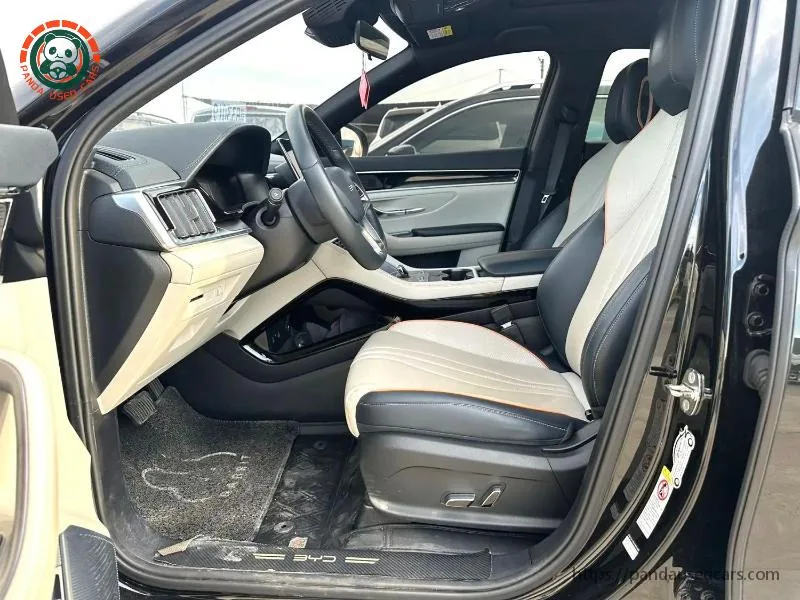
Check rear seating, child-seat installation where relevant, luggage fit, visibility and everyday control use on both candidates. Use the Song Plus cabin file as a repeatable loading brief and trial the H6 equivalently. Headline class labels and unqualified boot measurements are weaker than checking whether the buyer’s actual items fit with required seats occupied. Test permitted ordinary road behaviour rather than acceleration contests or unsupported terrain demonstrations. If family access or ride comfort is essential, name that requirement before negotiating price. A well-suited package can be preferable even when the other vehicle has a more impressive advertised equipment list.
Keep current condition and local support independent of brand preference
Obtain system-specific independent inspections, relevant service and repair records, and suitable diagnostic access for both cars. The Song Plus inspection guide provides its own scope, not permission to apply BYD procedures to Haval systems. Ask receiving workshops about exact components and qualified support rather than assuming all hybrids share parts or expertise. Confirm coverage with actual providers and intended use. Familiar local sale of a related H6 or Seal U does not prove the offered original-market import qualifies. A broad belief that one brand is reliable should not erase an unresolved warning or substitute for a paid repair route.
Decide on complete fit and readiness-adjusted value
Align essential preparation, delivery, documentation and destination readiness through the price guide. Use the three-year cost worksheet with supported energy assumptions and no guaranteed resale advantage. Choose DM-i when its actual charging and driving routine produces useful value at an acceptable complete cost; choose an identified H6 HEV where that ownership package better meets the same brief. Investigate significant gaps on either side before choosing. The RAV4 comparison can add another specific alternative, but a larger shortlist should not replace obtaining coherent evidence for the vehicle that is finally accepted.
Compare the acceptance conditions
- Plug-in routine is useful
- Confirmed charging and daily travel make the identified DM-i’s electric-use benefit worthwhile alongside acceptable condition and support.
- HEV route suits the buyer
- The actual H6 HEV provides a clearer ordinary routine and service package without relying on unavailable plug-in access.
- More evidence changes the choice
- Powertrain labels, economy context or destination support are not comparable; clarify those before approving either price.
Buyer evidence checklist
- Plug-in DM-i and actual H6 HEV identity
- Repeatable charging versus fuel-led routine
- Comparable economy observation context
- Family loading and ordinary road trial
- Independent findings and exact provider support
Questions before you buy
Is every Haval H6 a non-plug-in hybrid?
No. The model family includes different propulsion products across markets. Identify the offered HEV rather than relying on the family name.
Can weighted DM-i fuel consumption be compared directly with HEV use?
Not without context. Use the actual charging routine and applicable test basis, then compare credible ordinary operating observations.
Primary and regional references
Each reference describes its own market or commercial scope; it does not identify the offered VIN or prove its condition or availability.
GWM South Africa Haval H6: regional propulsion and trim context ↗BYD Mexico Song Plus DM-i: separate regional reference ↗