
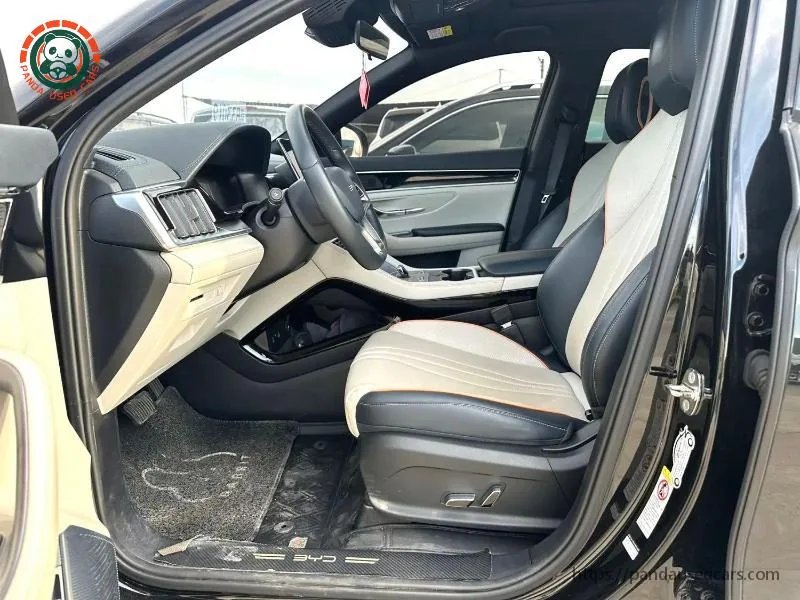
For Song Plus cabin and luggage suitability, first define what a pass looks like. Then compare the actual vehicle with that standard using documents, inspection media and destination advice.
Decide Song Plus cabin and luggage suitability
Start with the real task: passenger heights, child seats, pushchair or mobility equipment, airport luggage and frequency of full-load travel. A current official Sealion 6 sheet lists five seats, a 2,765 mm wheelbase and 425 litres with the rear seats up, expanding to 1,440 litres when folded. Treat those as version-specific reference figures, not proof for every Song Plus. For a family shortlist, combine luggage measurements with a child-seat and rear-access trial using the actual restraints and normal front-seat positions. Camping accessories change both storage and power needs. Use the V2L appliance-planning guide alongside the measured luggage arrangement.
Evidence for Song Plus cabin and luggage suitability
Measure the shortlisted vehicle with the required seats positioned for its occupants. Record boot opening width and height, floor length, load lip, parcel shelf, spare-wheel or repair-kit location and the space left after child seats. Photograph the measurement points and VIN together.
Export and ownership exposure
Published litres do not describe box shape, sloping glass, wheel-arch intrusion or whether a long item can sit beside passengers. Market versions may differ in seats, power tailgate, roof hardware and supplied cargo accessories. Overloading also changes braking, tyre and shipping considerations.
Apply the decision to a real candidate
Load the actual suitcases, stroller, samples or mobility equipment before approval when possible. For commercial use, compare payload and axle limits from the candidate documents rather than assuming that available volume equals permissible weight.
Build the VIN-linked record
Keep one dated decision log. Each entry should identify the source, vehicle, finding and next action for seat and trim version, passenger fit, boot measurements. Attach commercial evidence separately so technical acceptance is not rewritten by negotiation.
Common approval mistakes
The common shortcut is treating a model-level fact as candidate proof. Verify seat and trim version physically and on records, qualify child-seat anchors by destination, and exclude any unconfirmed feature from the value calculation.
Close the decision
Before this file advances, reconcile seat and trim version with the vehicle and its documents, and price any unresolved boot measurements consequence. Record who controls required cargo test after arrival. If the answer exists only in an informal message, move it into the dated approval record or leave the candidate on hold.
Independent review for Song Plus cabin and luggage suitability
For Song Plus cabin and luggage suitability, assign each approval field to a reviewer with the relevant competence. Record candidate evidence for seat and trim version, passenger fit, boot measurements, then obtain destination or commercial confirmation for child-seat anchors, payload documents, required cargo test where required. Every conclusion should identify its source, date and VIN. If two reviewers interpret a field differently, keep it open until the underlying document, photograph, diagnostic result or written third-party answer resolves the difference.
Arrival controls for Song Plus cabin and luggage suitability
Before loading, freeze the accepted VIN, identity, condition, odometer, warning state, keys, accessories and unresolved exceptions. On arrival, compare those records before cleaning, repair, software changes or routine use. Recheck any open item involving child-seat anchors, payload documents, required cargo test, preserve evidence for a timely carrier or supplier claim, and update the ownership file with actual destination findings and costs.
Translate the guide into a buyer brief
A workable brief for Song Plus cabin and luggage suitability names the destination market, intended route pattern, home or public charging plan, required equipment and acceptable exceptions. It also distinguishes a preference from a condition of purchase. Use seat and trim version and passenger fit as evidence gates, not seller questions with yes-or-no answers. Ask for the underlying label, screen, document, test result or dated photograph. That record lets a second reviewer reach the same conclusion without depending on the listing description.
Stress-test the shortlisted vehicle
Before approval, model one difficult ownership week: low battery, unavailable preferred charger, a warning message, a parts request or an unexpected registration query. Check whether boot measurements, child-seat anchors and payload documents leave a practical route forward. The purpose is not to predict every fault. It is to expose a dependency whose cost or delay would change the purchase decision, then record who accepts that dependency.
BYD Song Plus Interior, Seating and Boot Space: approval checklist
Mark each item confirmed, unresolved or rejected and retain its evidence under the candidate VIN.
- Seat and trim version
- Passenger fit
- Boot measurements
- Child-seat anchors
- Payload documents
- Required cargo test
Primary references
These manufacturer pages establish context; actual specifications remain market-, year- and VIN-dependent.
BYD Sealion 6 official vehicle specification ↗BYD SEAL U DM-i official model page ↗Related checks before you decide
Review market-specific dimensions, candidate sourcing brief, Song Plus versus Atto 3 comparison. These checks cover the technical, commercial and destination questions that this comparison alone cannot settle.
Buyer questions about Song Plus cabin and luggage suitability
How large is the Song Plus boot?
A current official Sealion 6 specification lists 425 litres seats-up and 1,440 litres seats-folded, but verify the exact market version.
Is it a seven-seat SUV?
The referenced Sealion 6 specification lists five seats; confirm the legal seating count of the candidate.
Does boot volume prove family suitability?
No. Test the actual occupants, child seats and luggage together.