
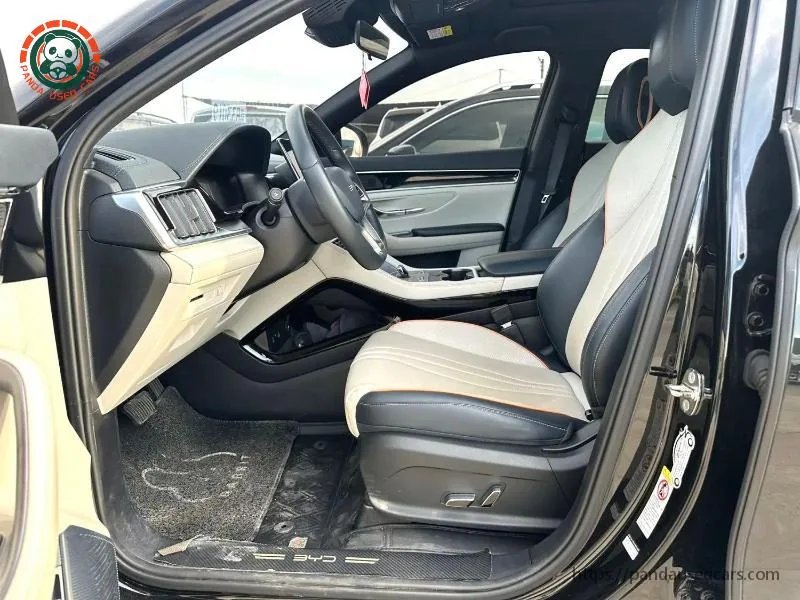
Confirm approved positions and hardware
Check the owner information and the restraint manufacturer's instructions for the exact seat model, seating position and fitting method. Identify the correct anchorages, belt route and any tether or support-leg requirements. Do not use a luggage hook as a substitute or assume that every rear position accepts the same restraint. If compatibility remains unclear, use a qualified fitting service. The Song Plus specification checks should establish the actual seating configuration before a seller describes a version as suitable for a particular number of child seats.
Retain normal adult seating positions
Set the driver and front passenger seats first, including the backrest angle they will actually use. Then assess restraint installation and access according to the instructions. Record whether a rear-facing seat creates a conflict with the front occupant and whether belt buckles remain usable. Do not solve a clearance problem by loosening a restraint, changing an approved angle or making the driver sit unsafely. A showroom demonstration with both front seats moved forward is not a realistic family test. Keep the exact restraint model in the notes so another candidate is tested consistently.
Test the everyday loading movement
With the car safely parked, try opening the rear door in a realistic parking gap and reaching the harness from outside. Assess roof clearance, sill height and the caregiver's posture. Where a child participates, supervision and correct restraint use remain essential; never leave a child alone during an inspection. Compare both sides if the usual parking arrangement limits one door. A wide cabin may still be awkward in a narrow garage. Check child-lock operation using an adult and the correct instructions, and make sure regular caregivers understand the controls before the vehicle enters daily service.
Load the pushchair and travel equipment
Put the actual folded pushchair, bags and essential supplies in the luggage area. Check access with the restraints installed and normal passenger space preserved. The interior and boot guide explains why quoted volume is not a guarantee of fit. Secure heavy objects appropriately and keep visibility and access requirements in mind. Do not rely on piling luggage beside a child or folding a seat that the family needs occupied. Include charging equipment and any travel accessories in the exercise; they occupy real space even when a brochure photograph shows an empty boot.
Check comfort and used-car condition separately
Observe rear airflow, sun exposure and ride comfort during a safe ordinary drive. For cold climates, include the heating and visibility checks; for hot weather, confirm sustained cooling at occupied positions rather than only a cold front vent. These observations assess usability, not crash performance. On a used vehicle, inspect belts, seat mountings and accessible restraint hardware, and investigate damage or undocumented repairs through a qualified inspector. Do not repair safety-critical restraint components with improvised hardware or assume that clean upholstery proves the underlying seat assembly is undamaged.
Define the family requirement before purchase
If two specific restraints and a pushchair are non-negotiable, make that combination part of the sourcing brief. Record the successful installation method and practical access limitations without publishing children's personal information. Repeat the assessment if the vehicle or restraint model changes. New and used cars both need compatibility checks; a higher trim does not automatically improve fit. When a proposed arrangement is marginal, compare a different restraint approved for the vehicle or another vehicle rather than forcing the fit. The right decision is the arrangement the family can use correctly every day, not the one that fits only for a photograph.
Use the evidence in a real buying decision
A family may find that two restraints install correctly but leave poor access to the buckle needed by another passenger. That is a practical constraint even if the bench looks wide in photographs. Ask a qualified fitter about approved alternatives and repeat the complete arrangement. Do not move a restraint to an unapproved position or rely on an extender merely to make a preferred vehicle appear suitable.
Buyer checklist
- Approved restraint and seating combination
- Front occupants in normal positions
- Caregiver access and child-lock understanding
- Real pushchair load and inspected seat hardware
Questions and answers
Does a wide rear bench guarantee three child seats will fit?
No. Seat shapes, buckles, approved positions and restraint dimensions determine whether the arrangement works.
Can I assess fit from an export-market brochure?
Use it only for initial screening. Verify the actual vehicle and restraint instructions, then perform a proper fitting trial.
Manufacturer reference
Use the applicable market and year documentation for equipment and operating limits. These model references do not establish the condition, fitted equipment or destination approval of an individual vehicle.
Continue with the Song Plus interior and boot guide, or send your vehicle requirements.